When the Music Stopped: Pat Molittieri’s Journey Beyond American Bandstand
A Saturday Afternoon in Southwest Philadelphia
In the autumn of 1957, the living rooms of America had acquired a new kind of furniture — not the kind made of wood or upholstered fabric, but the kind made of light and sound. Every weekday afternoon, from three to four-thirty, the television set ceased to be a box in the corner and became a window. On the other side of that window, in a converted studio on Market Street in Philadelphia, teenagers danced.
American Bandstand had gone national that August, carried now by the ABC network into millions of homes from Maine to California. For the first time in the country’s history, youth was not merely felt — it was transmitted. And in the row houses of Southwest Philadelphia, in the neighborhoods around Passyunk Avenue where Italian and Irish families had raised their children through the postwar years, a generation of teenagers suddenly discovered that the world was watching them.
Among those teenagers was a fourteen-year-old girl named Pat Molittieri. She stood five feet three, with dark brown hair and brown eyes, and she arrived at the WFIL studios with the particular confidence of someone who had not yet fully understood what she was walking into. She came from Bartram High School, from a neighborhood where girls were still expected to be girls — careful, presentable, appropriate. What she found inside Studio B was something else: a permission, broadcast daily, to be visible.
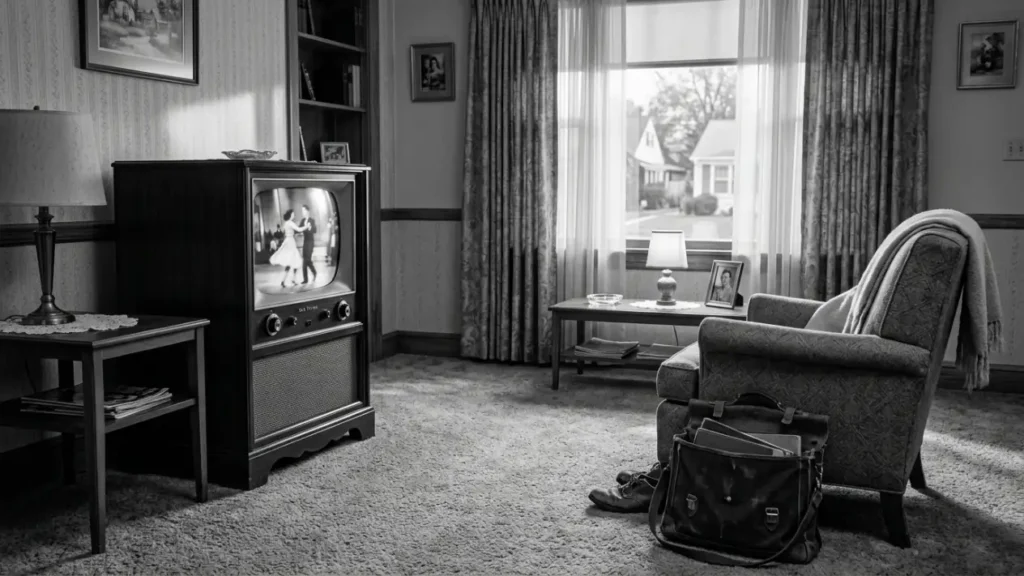
Southwest Philadelphia living room in the late 1950s — a wooden television set aglow, the distant sound of music drifting through an autumn afternoon.
The Girl Who Commanded the Camera
From the moment Pat Molittieri appeared on American Bandstand, she was hard to look away from. It was not simply beauty, though she was striking. It was something more difficult to define — a quality of complete presence, the sense that she was entirely herself and entirely unbothered by the camera aimed at her. In an era when teenagers were expected to be seen but rarely heard, she somehow managed to be both.
She danced with a rotating cast of partners — Lou Salino, Bill Ettinger, Bill Cook, Frank Levins — but it was with Salino that her style became most distinctive. Together they performed the bop with the kind of synchronized ease that made even practiced moves look improvised, like jazz played by two musicians who had never needed to rehearse. Ettinger brought out a different quality in her: a light, pushing rhythm that worked in counterpoint to the music rather than simply following it.
Viewers noticed immediately. Fan mail began arriving at the studio. A national fan club formed, with a teenager named Jane Smith as its president — one of hundreds of such clubs that had sprung up around the show’s regulars, each one a small testament to the improbable fact that ordinary Philadelphia teenagers had become, without anyone quite planning it, the first television celebrities of the rock and roll era.
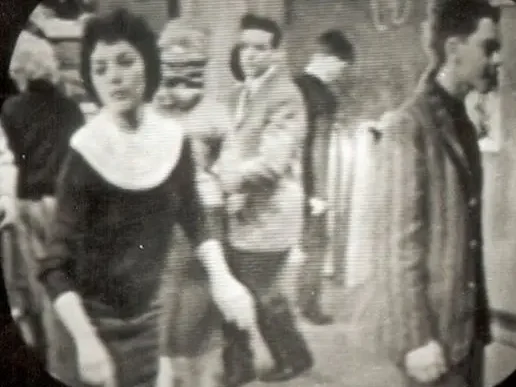
Molittieri’s fame received an unexpected and somewhat dramatic boost on August 9, 1957 — just as American Bandstand was completing its first week as a national broadcast. During the show, she was rushed from the studio in pain. An emergency appendectomy followed. She was gone from the screen for weeks. In her absence, viewers wrote in by the hundreds. Dick Clark read updates on her recovery to the audience. A teenage girl from Passyunk Avenue had become, briefly, a matter of national concern.
When she returned, her popularity had only deepened. There was something in the way the audience had waited for her — anxiously, as you wait for someone you have come to depend on without realizing it — that suggested she had crossed a threshold. She was no longer simply a dancer on a show. She was a presence that people had missed.
She became friends with Justine Carrelli, Peggy Leonard, Bill Cook, Frank Brancaccio — the inner circle of the Bandstand world, kids who had grown up in the same streets and now found themselves, without having sought it out, at the center of something much larger than the city they knew. They went to the studio after school and danced for four hours. They did not know, most of them, what to make of what was happening to them.
Pat Molittieri may have had a better sense of it than most.
Before Studio B
She had grown up in Southwest Philadelphia, that particular stretch of the city where the streets are narrow and close together and the sense of neighborhood is almost physical — something you move through rather than merely inhabit. Her family lived on Passyunk Avenue, one of the diagonal streets that cut through the grid of the city like a reminder that Philadelphia was older than its plan.
She attended Bartram High School, a large public school that drew from the surrounding blocks. She was not, by the accounts that survive, a girl who needed to be encouraged toward the spotlight. She had ambition of the kind that is easily mistaken for confidence: she simply did not seem to consider the possibility that the things she wanted might be out of reach.
The path to American Bandstand in those years was both democratic and controlled. You showed up, waited in line — unless you were a regular, in which case you were waved past the crowd at the door — and you danced. The show had a Committee, a small group of regulars given a degree of informal authority over proceedings. There were dress codes: no jeans, no dungarees, nothing that might read as rough or improper on camera. Dick Clark’s operation was famously disciplined. The freedom that viewers saw was always freedom within a frame.
For Molittieri, the frame suited her. She dressed well, understood the camera, and moved with a quality that was rare in a teenager: deliberateness. She looked, on screen, like someone who had already decided what kind of person she intended to be. She was fourteen years old.
What the camera could not show — and what those who knew the show understood — was the infrastructure of rules beneath the surface. The regulars were not employees. They received no payment, no contract. What they received was access, visibility, the extraordinary daily gift of appearing before a national audience. In exchange, they agreed, implicitly and then explicitly, to certain conditions. Chief among those conditions was a prohibition Clark enforced with the seriousness of a legal contract: no regular could benefit financially from their association with the show.
It was a rule that would define the shape of Pat Molittieri’s Bandstand years — and end them.
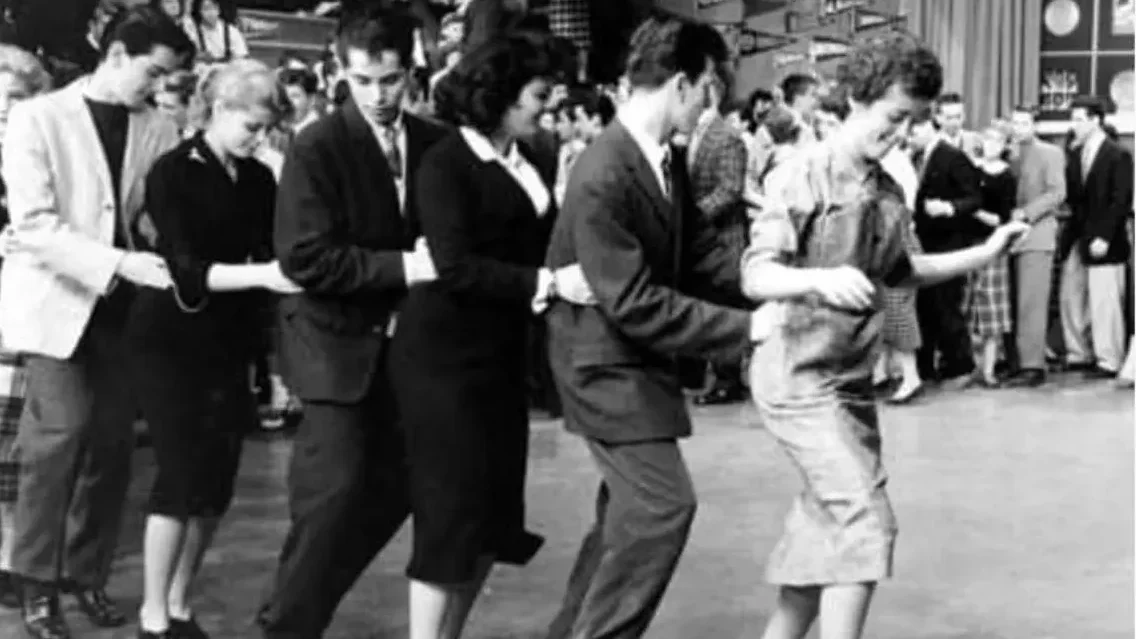
Pat Molittieri on the American Bandstand dance floor, Philadelphia, late 1950s.
The Height of Visibility
By 1958 and into 1959, Pat Molittieri occupied a specific and enviable position in the Bandstand world. She was not the most famous regular — Justine Carrelli and Bob Clayton, with their on-screen romance and jitterbug championship, claimed that distinction. She was not the most dramatic presence or the most written-about. But she was, among serious observers of the show, consistently named among the most compelling.
Her profile in the February 1961 issue of 16 Magazine described her as someone viewers — particularly female viewers — found both aspirational and accessible. She was the girl from Southwest Philly who had made it to the screen without appearing to have made anything at all, as though visibility had simply arrived at her door and she had answered without surprise. Male viewers found her attractive. Female viewers found her someone they could imagine being. Both were useful qualities for a teenager trying to sustain a presence in the new, strange medium of national television.
The fan club letters came from across the country. There were photographs requested and, sometimes, photographs sent. There was the particular intimacy that television creates — the sense, entirely false and entirely convincing, that you know someone because you have watched them dance in your living room five days a week.
Behind the fame, though, something practical was taking shape. Molittieri was paying attention. She was watching how the teen magazine world was beginning to organize itself around the Bandstand phenomenon, how publications like Teen and 16 and Dig were discovering that the regulars were a kind of currency — recognizable faces that could sell magazines to the audience that watched the show. She noticed that editors were interested. She noticed that writers were being paid.
She began to consider the possibility that there was something she could do with the attention that had come to her — something beyond the daily practice of showing up to a studio and dancing for four hours. She had opinions about fashion, about relationships, about the social world that American Bandstand was making visible to a national audience. She believed she could write about those things in a way that her readers — girls like her, from neighborhoods like hers — would recognize and want to read.
She may not have fully understood, at the time, that this belief would cost her everything she had built.
The Turning Point
On the evening of June 24, 1959, Dick Clark asked Pat Molittieri to remain behind after the show had ended.
It had been, by any measure, an extraordinary week for Clark. His life story was to be featured that very night on This Is Your Life, a television program that surprised its subjects on the evening of the broadcast — though in Clark’s case the appearance had been deliberately leaked to ensure the large teenage audience the network wanted. He was also in the final stages of preparation for his first live prime-time special on ABC, scheduled for late September. He was, in every sense, at the height of his own powers.
And yet what was on his mind, as the afternoon audience filed out and the studio emptied, was a column in a teenage magazine.
Charles Laufer, the California-based publisher of Teen, had been paying Molittieri for a regular column about her experience on American Bandstand. She wrote about fashion. She wrote about the social dynamics of the show. She wrote about what it felt like to be a teenager watched by millions. She was good at it — clear, direct, specific in the way that only someone writing from inside an experience can be. Laufer paid her a small sum for each column. The arrangement made complete sense from a publishing perspective. It made no sense at all within the world Dick Clark operated.
He told her, quietly and without particular drama, that she was no longer welcome on the show.
The rule she had violated was not written anywhere that outsiders could see, but it was absolute: regulars did not profit from their Bandstand exposure. They received camera time, a place at the center of the most-watched youth television program in the country, the permission to be known. They did not receive money. The moment money changed hands, the arrangement ended.
Molittieri later wrote about that conversation in the October 1959 issue of Teen — continuing, even after her ejection, to do the thing that had caused it. She called the day she went home to school instead of to Bandstand “the loneliest day of my life.” The sentence is brief and unembarrassed, and it carries within it the full weight of what had been lost: not just the show, not just the fame, but the particular quality of afternoon that the studio had provided — the hours of music and movement and the sense that something was happening, that you were inside it.
She was seventeen years old. She was out.
What she chose to do next revealed something essential about her character. She did not return to Southwest Philadelphia and take a quiet job and allow the Bandstand years to become a story she told at family dinners. She moved to California.
Laufer, who had caused — however unintentionally — her removal from the show, remained her employer. She continued writing her column. She babysat the publisher’s children. She enrolled at Hollywood Professional School, a institution catering to young people in or adjacent to the entertainment industry, where her classmates included Cubby O’Brien, the former Mouseketeer, and the Adrissi Brothers. She was doing what she had always done: arriving somewhere new and making herself at home.
She modeled for Teen Magazine, photographed alongside Carole Scaldeferri — another Bandstand regular who had made the California journey — in front of Grauman’s Chinese Theatre on Hollywood Boulevard. She recorded a single: The USA, a song written by Paul Anka, which was released on Teen Magazine‘s record label and became, in time, a collector’s item for the small and devoted community of people who track the ephemera of that particular cultural moment.
She attempted an acting career. Her most notable screen credit, in retrospect, is a brief appearance as an extra in Where the Boys Are, the 1960 film featuring Connie Francis and George Hamilton — a movie that was itself a document of the teen culture she had helped shape. She dated, as newspapers of the era would have put it, several of Hollywood’s most eligible young men: Don Adrissi, Mike Clifford, Tony Cosmo, Bobby Burgess. She was living, in miniature, the life that the trajectory of her Bandstand fame had seemed to promise.
But the trajectory had a different end in mind.
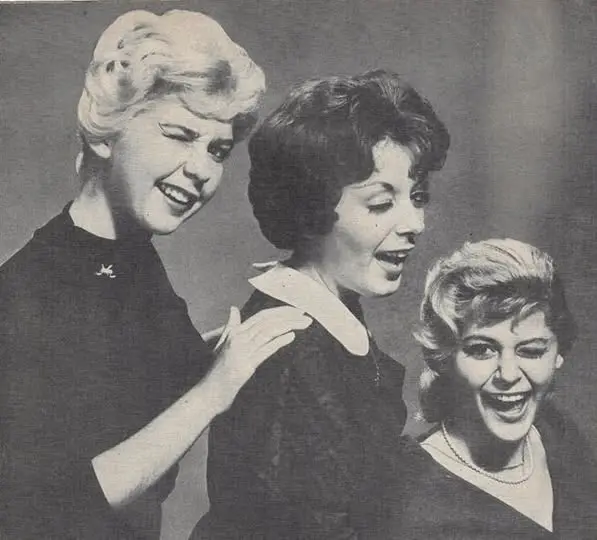
Giving the guys the eye(s) are Justine, Pat Molittieri and Frani — something for every taste bud!!
Life Beyond the Spotlight
She came home.
At some point in the early 1960s, Pat Molittieri returned to the Philadelphia area — to the streets and the rhythms she had grown up with, the particular gravity of home that pulls at people even when they have managed to escape it. The California years were behind her. The magazine column, the recording, the acting career — these were, by now, the things that had not quite happened.
In 1963, she met a man named Victor Ranieri at a club in Drexel Hill. She was twenty years old. They married in September of 1965. She was, by then, twenty-two — old enough to know what she was choosing.
The marriage represented, as such choices always do, both an arrival and a departure. She stepped away from the orbit of entertainment — from the magazine world, the recording sessions, the constant motion of a life organized around visibility — and into the quieter, more substantial world of a Philadelphia family. She had two daughters: Dellane, whose middle name honored her mother, and Dana. She raised them in a neighborhood not entirely unlike the one she had come from. She made the life that was available rather than the life that had, for a brief window, seemed possible.
Those who knew the Bandstand world remember Victor Ranieri as a devoted man. After Pat’s death, he raised their daughters alone, and he did so with the kind of determined constancy that leaves no room for the self-pity that grief invites. He was described, by those who knew the family, as a wonderful and dedicated father. He too has since passed.
Dana Ranieri died in 2016, of cancer, leaving behind two children — Sean and Kylie. Dellane, who carries her mother’s name embedded in her own, raised three sons. There are five grandchildren in total: five lives that exist, in the long arithmetic of time, because a fourteen-year-old girl from Southwest Philadelphia once walked into a television studio and decided to dance.
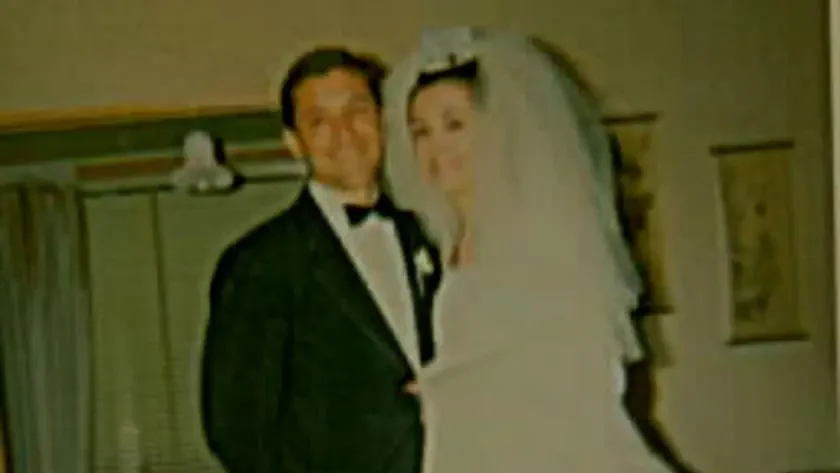
Pat Molittieri and Victor Ranieri on their wedding day, September 1965 — the choice that came after the spotlight, and the life that followed.
What Remains
Pat Molittieri died in early July 1979. She was thirty-six years old. The cause was mitral valve prolapse — a condition of the heart, present since birth, that had moved through her life invisibly until it did not.
She had been, depending on how you count, a television celebrity for two years, a magazine columnist for somewhat longer, a California transplant for a handful of seasons, and a wife and mother for the better part of a decade and a half. The Bandstand years were a small fraction of the whole. They were also, by any accounting of public attention, the part that lasted.
In the community of former regulars and fans that has gathered over the years around the memory of American Bandstand, Molittieri remains a vivid and specific presence — not the most famous of the regulars, but one of those whose particularity survives in the record. The single she recorded. The column she wrote about the loneliest day of her life. The photograph taken in front of Grauman’s Chinese Theatre, two girls in early-1960s California, evidence that she had tried to turn her moment into something permanent.
She had understood, perhaps earlier than most, that visibility was a resource — that the attention of millions was not merely pleasant but potentially useful, that there might be a way to convert the extraordinary circumstance of being a Bandstand regular into something that would outlast the daily broadcast. It was not a cynical understanding. It was the understanding of a girl who had grown up in a neighborhood where you had to make use of what you were given because the supply was finite.
Dick Clark had other ideas about how that resource should be managed. He was, in his way, correct. The prohibition that ended her Bandstand years was what kept the show’s particular magic intact: the sense that these were real teenagers, ordinary kids from Philadelphia, who had not been manufactured or paid or shaped for the camera. The moment money entered the equation, the illusion of authenticity — which was not entirely an illusion — became more difficult to sustain.
And so she left. And so she went west. And so she came back.
A Quiet Reckoning with Time
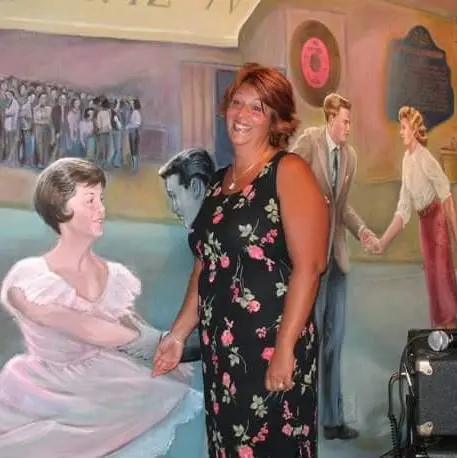
Daughter Dellane Patricianne Ranieri Develin standing by Pat Molittieri’s depiction on the WFIL wall mural
There is a sentence that Pat Molittieri wrote in the autumn of 1959 that has stayed with those who encountered it: the loneliest day of my life, she called the day she went to school instead of to Bandstand. It is the kind of sentence that stays with you not because it is dramatic — it is, in fact, the opposite of dramatic — but because it is so precisely true. It does not exaggerate. It does not perform. It simply describes a feeling that anyone who has ever lost something they loved will recognize immediately.
Television preserved the image of a fourteen-year-old girl in motion. The camera captured the particular quality of her presence — the confidence, the deliberateness, the ease on the dance floor that suggested she had been doing this her whole life rather than arriving at it. That image is still, in some sense, available: in archival footage, in the memory of those who watched, in the continuing life of the Bandstand community.
But the girl in that image grew up, made choices, built a family, and died at thirty-six — before she had time to look back on the Bandstand years with the comfortable distance of old age, before she could sit across from a grandchild and say, once, there was a time when the whole country watched me dance.
She did not get that conversation. What she left behind instead is the quieter evidence of a life that kept moving after the music stopped — daughters, grandchildren, a husband who raised them well, a column written from inside a moment that had already passed. It is not the legacy she might have imagined for herself at fourteen. It may be, in the end, the more lasting one.
American Bandstand ran nationally from 1957 to 1989. Pat Molittieri danced on the show from 1957 to 1959. She was among the first regulars to navigate the complicated territory between celebrity and commerce in the new world of teenage television — and among the first to discover where that territory’s limits lay.
American Bandstand’s Pat Molittieri: The Girl Who Invented a Dance and Paid Everything for It
What Arlene Sullivan Was Really Hiding Behind Those Perfect Dance Steps
American Bandstand’s Pat Molittieri: The Girl Who Invented a Dance and Paid Everything for It
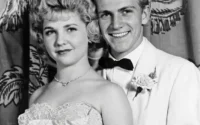
Bob Clayton and Justine Carrelli: American Bandstand’s Sweethearts — Did They Ever Marry?
About The Author

Arthur Pendleton
A lifelong fan of the golden era of music, dedicated to preserving the timeless memories and stories of American Bandstand.