Bob Clayton: American Bandstand’s Dream Boy and the Life That Followed
He was not born famous. He drove to fame — and then he drove home.
A Boy with a Plan
He skipped study hall, borrowed his father’s black Chevrolet Impala, and drove thirty-two miles up Route 13 without telling anyone where he was going. He wasn’t running away. He was running toward something — a girl he had seen on television, dancing alone, and a feeling he couldn’t name but wasn’t willing to ignore.
It was 1957, and American Bandstand had just gone national. On August 5 of that year, the afternoon dance program broadcast out of WFIL’s Studio B in Philadelphia reached sixty-seven television stations across the country, and almost overnight it became the most watched program in afternoon television. Six million viewers tuned in every weekday. They watched teenagers from two Philadelphia high schools — West Catholic and South Philadelphia, mostly — dance to the latest hits, rate new records, and move through the particular rituals of a generation that was, for the first time, being watched by the whole country.
In Wilmington, Delaware, a sixteen-year-old named Bob Clayton was one of those viewers. He had already been dancing on a local program called Grady and Hurst’s show, so he understood something about a studio floor and a camera. But what he saw on Bandstand was different. There was a girl — blonde, conservatively dressed, easy on the floor — and she didn’t seem to have a steady partner. Bob Clayton noticed. And Bob Clayton, as anyone who knew him would tell you, was not the kind of young man who noticed things and did nothing about them.
He made his decision sometime between the opening credits and the final slow dance. He would go to Philadelphia. He would find her. And she was going to be his girlfriend.
The Dance That Changed Everything
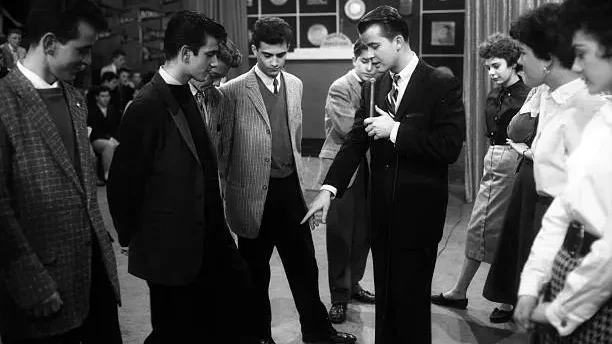
The girl’s name was Justine Carrelli, and she was, by any measure, the most recognized teenager on American Bandstand. She had first danced on the show in 1956, when she was twelve years old — two years younger than the rules allowed — having borrowed her older sister’s birth certificate to get past the doorman. By the time Bob Clayton drove up from Delaware, she was already a familiar face in millions of American living rooms.
Justine was not immediately impressed. She told him she had a boyfriend. Bob thanked her for the information and promptly asked her friends to dance instead. He worked his way around the room, patient and deliberate, until the hour was nearly over. Then he walked back to Justine.
“Are you going to dance with me or what?” he said.
She said okay. They danced. And by Justine’s own account, it felt like they had always been dancing together.
Bob Clayton was tall and easy in his movements, with the natural confidence of someone who had never seriously considered the possibility that things might not go his way. He was what the era called an all-American boy — not in the scrubbed, manufactured sense that the teen magazines would later apply to him, but in the simpler, older sense of someone who showed up and meant it. He wore his jacket, kept his tie straight, and moved across the floor with a kind of controlled pleasure that the cameras understood immediately.
Within days, the letters began arriving. Viewers had seen something in the way Bob and Justine moved together — a chemistry that the camera caught and amplified without either of them quite knowing it was happening. Bandstand’s regular dancers were known as the Committee, a loosely organized group whose membership depended entirely on whether viewers knew your name and wrote to you. Bob Clayton became a Regular quickly. He had that quality, rare even among the show’s most popular faces, of appearing completely at ease while being watched by the entire country.
After each broadcast, the regulars would walk down to Pop Singer’s, a nearby soda fountain, for cherry Cokes and conversation. On his way back to Delaware, Bob would often drive fellow regulars Arlene Sullivan and Pat Molittieri home. It was a practical arrangement, but it was also something else — the texture of an ordinary life that was, for this brief window, anything but ordinary.
Before Route 13
Bob Clayton grew up in Wilmington, Delaware, in a family that offered nothing unusual and everything necessary. His father Robert, his mother Ester, his brother George, and his sisters Carol and Sandy made up a household that was modest, stable, and entirely unprepared for what was about to happen to one of its members. Bob was a student at P.S. DuPont High School, set to graduate in 1958, with no particular designs on fame.
He had been dancing at local venues before Bandstand — the Grady and Hurst show gave him a floor and a little bit of local visibility — but the scale was entirely different. Wilmington was not Philadelphia. A local dance show was not a national television program reaching four million homes.
What Bandstand offered its regulars was not just exposure but structure. Boys were required to wear jackets and ties. Girls wore dresses. No pants, no low necklines, no leather jackets. The dress code was enforced not out of puritanism but out of survival — the show’s producers understood that if American Bandstand was going to introduce rock and roll to a nation of skeptical parents, the teenagers on screen had to look like the kind of young people those parents recognized and trusted. You could not argue with the music if the kids dancing to it looked like juvenile delinquents. You could not argue with anything if they looked like the children you had raised.
Bob understood the terms. He kept his jacket pressed and his tie straight, and he showed up. That was, in many ways, the whole of the arrangement.
America’s Sweethearts
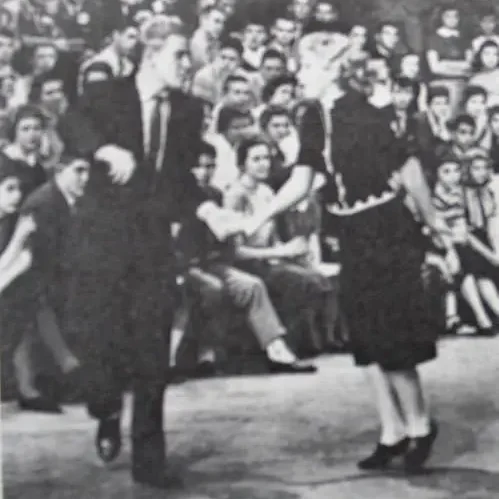
The Jitterbug contest of 1957 is the number most people remember when they remember Bob Clayton. One million postcard votes. Two winners. Two jukeboxes, each loaded with two hundred records. It was the kind of prize that the era understood — not money, not a recording contract, but music, tangible and immediate, something you could carry into a room and play.
Dick Clark, writing about the show years later, described Bob and Justine as “the dream couple of the show, the star-struck lovers,” and added that they “personified the innocent lyrics of the songs they danced to.” It was an accurate observation, and not only because they were attractive and well-matched on the floor. It was because they seemed, to the millions watching, to be genuinely invested in each other — not performing romance for the camera but living it in front of one, which is a different thing entirely and considerably harder to fake.
The fan clubs followed. By the height of his Bandstand years, Bob Clayton had approximately half a million fan club members across the country. For less than a dollar, a fan could receive a membership card, a newsletter, an autographed photograph, and periodic updates on where Bob would be appearing and what he had been doing. He received cufflinks from all over the United States after mentioning on air that he liked shirts with French cuffs. He appeared on magazine covers, in newspaper features, at dances and shows from coast to coast.
In August of 1958, when Dick Clark took a vacation, Bob Clayton was one of only six disc jockeys ever asked to fill in as host of American Bandstand. He stood behind Clark’s elevated podium, introduced the records, interviewed the artists, and conducted Roll Call — “Joanne, seventeen, South Philly”; “Scott, fifteen, North Catholic” — with the ease of someone who had been watching how it was done for long enough to know the rhythm of it. Whether he imagined, standing there, that this was a door that might open further, is something no record tells us. But the ambition was always there, quiet and persistent underneath the easy confidence.
The Record, the Road, and the Reckoning
The turning point came in the way that many turning points do — not as a single dramatic event but as a sequence of smaller decisions, each one sensible in isolation and collectively decisive.
Bob and Justine recorded a song together called “Drive-In Movie” on the Fransil label. It was a reasonable idea. They had half a million fans. They had name recognition that most recording artists spent years trying to build. What they had not accounted for was a rule, unwritten but absolute, that Bandstand regulars did not release records while appearing on the show. The logic was straightforward: if a dancer became a recording artist, the line between performer and audience surrogate dissolved, and what made the regulars valuable — their ordinariness, their accessibility, the sense that they were just like the kids watching at home — would be gone. The record was released. Both of them were removed from the show. The record did not sell.
The romance did not survive the transition either. Justine, in interviews years later, was direct about it. Bob, by his own admission, had developed a wandering eye. They had, he said, been outgrowing each other. Whatever the precise truth, the partnership that had seemed, to six million daily viewers, like the natural extension of every love song they had ever danced to, ended without ceremony.
In 1960, Bob went to Hollywood. He was five feet eight inches tall and found himself surrounded by men who were six feet. He made some inquiries, looked at the landscape clearly, and called his father to ask for money for the trip home. There was no bitterness in the telling of this story, at least not in the versions that survive. It reads more like the account of someone who had taken a reasonable measurement of the situation and acted accordingly.
He was twenty years old. He had been on the cover of national magazines. He had danced in front of more people than most performers ever perform for. And now he was driving back to Delaware.
The Business of a Life
What came next was not a diminishment. It was simply a life.
Bob Clayton built a career in retail and wholesale that began with Storm’s Shoes and moved through The Little Heel and Wanamaker’s Department Store before he opened his own stores — four of them, at his peak. Later he moved into the chemical business at Diamond Chemical and Supply Company, where he worked until he retired in 1998. He and his second wife, Elizabeth — known to everyone as Litzie — eventually owned a small gift boutique together, though by that point Bob was content to be, as one account put it, “a stay-at-home retired partner.”
He had a drinking problem in those years, a detail that surfaces in the historical record without elaboration. He quit cold turkey in 1980. He suffered from high blood pressure and had a heart attack at fifty-four. He recovered. He kept going.
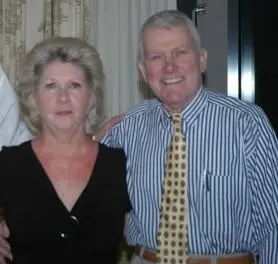
He married Litzie in 1985, and they were together for thirty-one years, until his death. They had three children: Sheri, Kristine, and Robert Wayne, known as Toby. There were grandchildren. There was a boat, and photographs of Bob and Litzie out on the water, squinting into the sun with the particular contentment of people who have settled into something good.
In 1992, at the fortieth anniversary reunion of American Bandstand, Bob saw Justine for the first time in years. They danced together. “It was like we had never stopped,” he said afterward. “We used to dance every day for four hours.” They remained, in the years that followed, something rarer than former lovers — they remained friends. There are photographs of Bob and Litzie and Justine and her husband Jim Miller at dinner together, four people in late middle age, easy in each other’s company.
What the Camera Kept
Bob Clayton died on November 6, 2016, at home in Wilmington, Delaware. He was seventy-five years old. The cause was congestive heart failure. The date was one day after the launch party for a book called Bandstand Memories, an event he had hoped to attend. His wife Litzie had been a member of the American Bandstand fan community for years, and she remained so after his death.
He had said, in one of his last recorded interviews, that he believed the Bandstand years had stayed with people not because of anything extraordinary about the dancers themselves, but because of what those years had meant. “Everybody that watched the show has gotten older together,” he said, “and I think the Bandstand period was a really good time in a lot of people’s lives.” He paused. “Talking to people, they remember that period as just being the best part of their lives.”
The television preserved something that the years could not touch — a boy of sixteen or seventeen, moving across a studio floor in Philadelphia, his jacket pressed and his tie straight, entirely confident that the girl across the room was going to say yes. The life that followed was longer and quieter and more complicated than any of that. It was also, by any honest measure, a good one.
Justine Carrelli: The American Bandstand Dancer Whose Image Outlasted the Spotlight
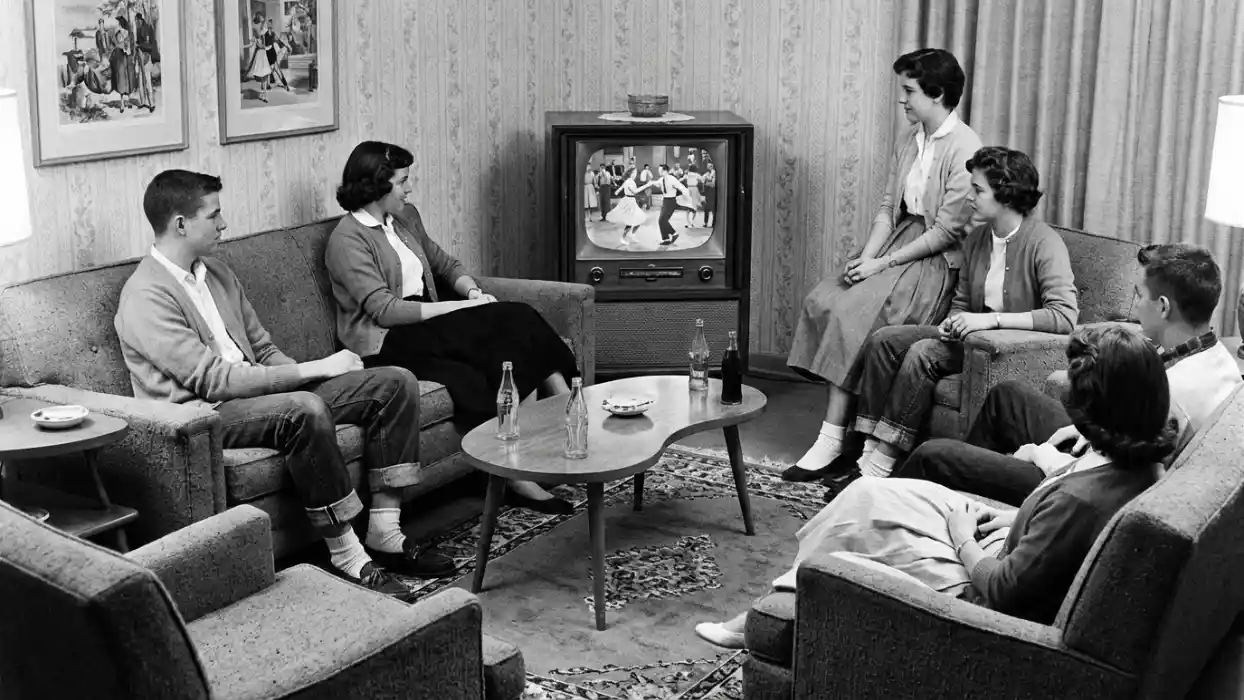
The Birth of the Televised Teenager: How American Bandstand Changed Youth Forever

What American Bandstand Showed the Suburbs About Themselves
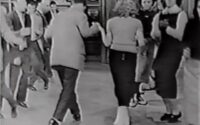
Who Remembers The Stroll? How One Dance Defined a Generation on American Bandstand
About The Author

Arthur Pendleton
A lifelong fan of the golden era of music, dedicated to preserving the timeless memories and stories of American Bandstand.