From American Bandstand to Forever: The Real Love Story of Frankie Avalon
From American Bandstand to Forever: The Real Love Story of Frankie Avalon. How television’s first teen idol built a life the camera was never meant to see
A Saturday Afternoon in Philadelphia
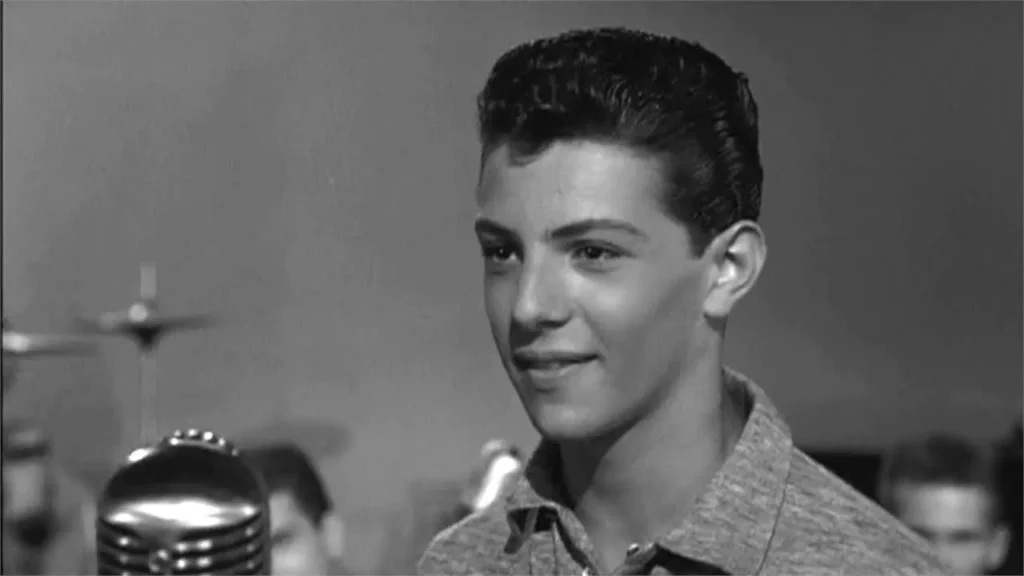
what happened to Frankie Avalon in 1957
It is the autumn of 1957, and somewhere in suburban America a television is on. The screen glows in the corner of a living room — a console model, wood-paneled, tuned to ABC at three o’clock on a weekday afternoon. On the screen, teenagers are dancing. Not performing exactly, just dancing — the kind of dancing that teenagers do when they think no one important is watching, except that now everyone is watching, across the entire country, all at once.
This is American Bandstand, broadcasting live from Philadelphia, and it has just gone national. For the first time in television history, a weekly program has handed the camera to ordinary young people and said: here, America — look at your children. And America, slightly startled, cannot look away.
Among the guests stepping out that season is a seventeen-year-old from South Philadelphia named Francis Avallone. He is compact, dark-haired, and possessed of a smile that the camera finds without effort. His managers have written him a song they consider throwaway material — light, bouncy, not especially serious. To make his feelings about it known, he sings it while pinching his nose. The nasal result, “De De Dinah,” releases in December. By February it has sold a million copies. And the boy from South Philly, who did not entirely mean to become famous, has become exactly that.
What the cameras captured was Frankie Avalon, teen idol. What they could not capture — what no studio light could reach — was the life he was quietly, deliberately, building just outside the frame.
How the Machine Worked
To understand what happened to Frankie Avalon in 1957, it helps to understand what had just happened to American television. Bandstand had been a local Philadelphia program for years — a dance show aimed at teenagers, hosted by a sequence of disc jockeys, watched by a loyal regional audience. When ABC picked it up and gave it a national slot in August of that year, something structurally new occurred. For the first time, a single camera in a single city could define what teenage life looked like for millions of households simultaneously.
Dick Clark, who had taken over as host the previous year at age twenty-six, understood the mechanism intuitively. The show was not primarily about the musical guests, though the guests mattered enormously. It was about the teenagers on the dance floor — their clothes, their movements, the way they held themselves — broadcast into living rooms where parents and younger siblings sat watching, absorbing a national image of American youth in real time. The music provided the frame. The dancers provided the mirror.
Into this machine stepped a series of young men from Philadelphia, and Avalon was the first to understand — or rather, to embody — what the machine required. He had genuine musical credentials, having played trumpet since childhood with the skill of a prodigy. He had appeared on Jackie Gleason’s television show as a boy. He had real chops, real stage presence, a musical background that most of his contemporaries lacked. But what Bandstand amplified was something different: the image. The look. The particular quality of being watchable without being threatening.
His appearances on the show from 1958 through 1962 were not simply promotional visits. They were, in the architecture of that era’s music industry, the mechanism of stardom itself. Avalon later reflected that Bandstand functioned like an official stamp of approval — if a record was approaching a breakthrough, a single performance on the show was enough to push it over. The camera did not merely reflect popularity; it manufactured it. A song performed for that studio audience on a Wednesday afternoon in Philadelphia could reach every teenager in the country by the weekend.
Chancellor Records, the Philadelphia label that signed Avalon, operated in close proximity to the Bandstand ecosystem. His managers, Bob Marcucci and Peter DeAngelis, understood the geography of the new music industry: the label, the show, and the performer formed a triangle, each sustaining the others. Bobby Rydell and Fabian followed Avalon down the same path within months, and the Philadelphia teen idol became a recognizable American type — clean-cut, accessible, carefully assembled for maximum appeal to a female teenage audience that had, for the first time in American commercial history, real spending power.
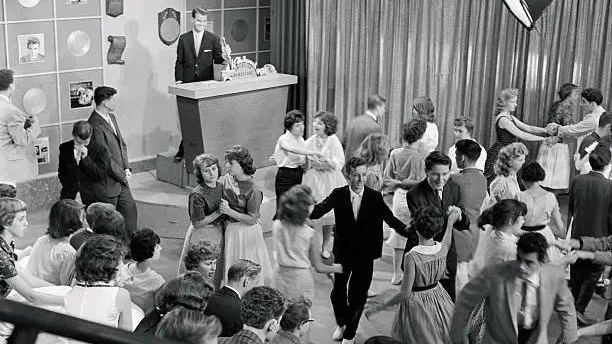
A visual recreation of an American Bandstand studio in 1959.
What the Machine Produced
The question that Bandstand raised — and never fully answered during its run — was what it meant to make a teenager famous. Not famous the way an adult film star was famous, not famous in the manner of a jazz musician who had paid decades of dues. Famous in the specific, modern, television-native sense: visible to millions of strangers, simultaneously intimate and remote, desired and unknowable.
For the girls watching from living rooms across the country, Frankie Avalon represented something the medium itself had invented: the attainable idol. He was not exotic. He was not dangerous. He was from Philadelphia, the son of a butcher, a boy who had learned the trumpet from his father and played local talent shows before anyone outside South Philly had heard his name. This ordinariness was not incidental to his appeal — it was the product. The machine required someone who looked like he could, conceivably, be yours.
“Venus,” released in 1959, went to number one for five weeks and sold over a million copies. Its lyric was a prayer addressed to the goddess of love — a plea to be sent a girl to love. The song captured something genuine about the emotional register of its moment: earnest, romantic, slightly yearning, entirely unthreatening. It asked nothing complicated of its listeners except the willingness to believe that a boy this handsome could also be this sincere. In that gap between image and sincerity, the teen idol lived.
What Bandstand produced, more broadly, was a new understanding of teenage identity as a visible, national phenomenon. Before television, a teenager in rural Ohio and a teenager in Philadelphia shared almost nothing in terms of cultural reference. After Bandstand, they shared Avalon. They shared the way the dancers moved, the clothes they wore, the particular way Dick Clark introduced a record. Youth identity was no longer local. It had been nationalized, standardized, broadcast — and in the process, the teenager had become both a consumer and a product, simultaneously buying the culture and embodying it.
The girls who screamed outside Avalon’s appearances — who made it impossible for him to walk an ordinary street for several years — were not simply expressing affection. They were expressing their own visibility. The show had told them their world mattered. Frankie Avalon, standing inside that world on a Wednesday afternoon, had become its proof.
The Tension Beneath the Surface
The teen idol, as a construction, required one thing above all others: availability. Not physical availability — the screaming fans understood they would never actually meet him — but imaginative availability. The idol had to remain, at least in the cultural fantasy, unattached. Free. Potentially, improbably, yours.
This was the machine’s central demand. And it was the demand that Frankie Avalon, at the height of his fame, quietly refused.
The circumstances are specific enough to be worth recounting. While filming The Alamo in 1960, Avalon became friends with Michael Wayne, the son of John Wayne. Michael Wayne was married to a woman named Gretchen Diebel. At a card game at the Wayne house, Avalon met Gretchen’s sister — Kathryn, known as Kay, a former beauty pageant winner with no particular interest in Hollywood. Avalon, by multiple accounts, turned to the friend beside him almost immediately and said: that is the woman I am going to marry.
The idol had to remain, at least in the cultural fantasy, unattached. This was the machine’s central demand. And it was the demand that Frankie Avalon quietly refused.
His agent had a different view. The warning was direct: marriage, at the peak of his career, would destroy the teen idol mystique. The fantasy depended on the absence of Kay Diebel. To acknowledge her existence — to make it official, public, legal — was to break the spell that the music and the television appearances had so carefully constructed.
Avalon married Kathryn Diebel on January 19, 1963, at St. Charles Catholic Church in West Hollywood. About fifty people attended. Outside, a small crowd of teenage fans stood waiting for a glimpse. The contrast is almost too neat to be true, and yet it happened exactly this way: inside, the ceremony; outside, the audience that had never been invited in.
The same year, he tattooed Kay’s name on his arm — and then spent the entirety of the Beach Party film series trying to keep it covered. He later joked that he spent more time hiding the tattoo than actually acting in the scenes. It is a small, quietly comic detail, but it illuminates the fundamental tension of the era: a man who had committed himself, in ink and in ceremony, to a life the industry told him he was not permitted to have.
The broader cultural anxiety of the early 1960s ran in the same direction. Parents who allowed their teenagers to watch Bandstand did so partly because the show offered a supervised, contained, respectable version of youth culture. Dick Clark in his suit. The dancers in their modest clothes. The music loud but not threatening. The whole enterprise was a negotiation between freedom and control, between the genuine energy of young people and the institutional need to make that energy safe for prime-time viewing. Avalon fit the negotiation perfectly: exciting enough to matter, clean enough to trust.
But the negotiation had a cost. The same machinery that made him visible made him, in a certain sense, fictional. And what the marriage to Kay Diebel quietly announced — to anyone paying attention — was that the fiction had never been the whole story.
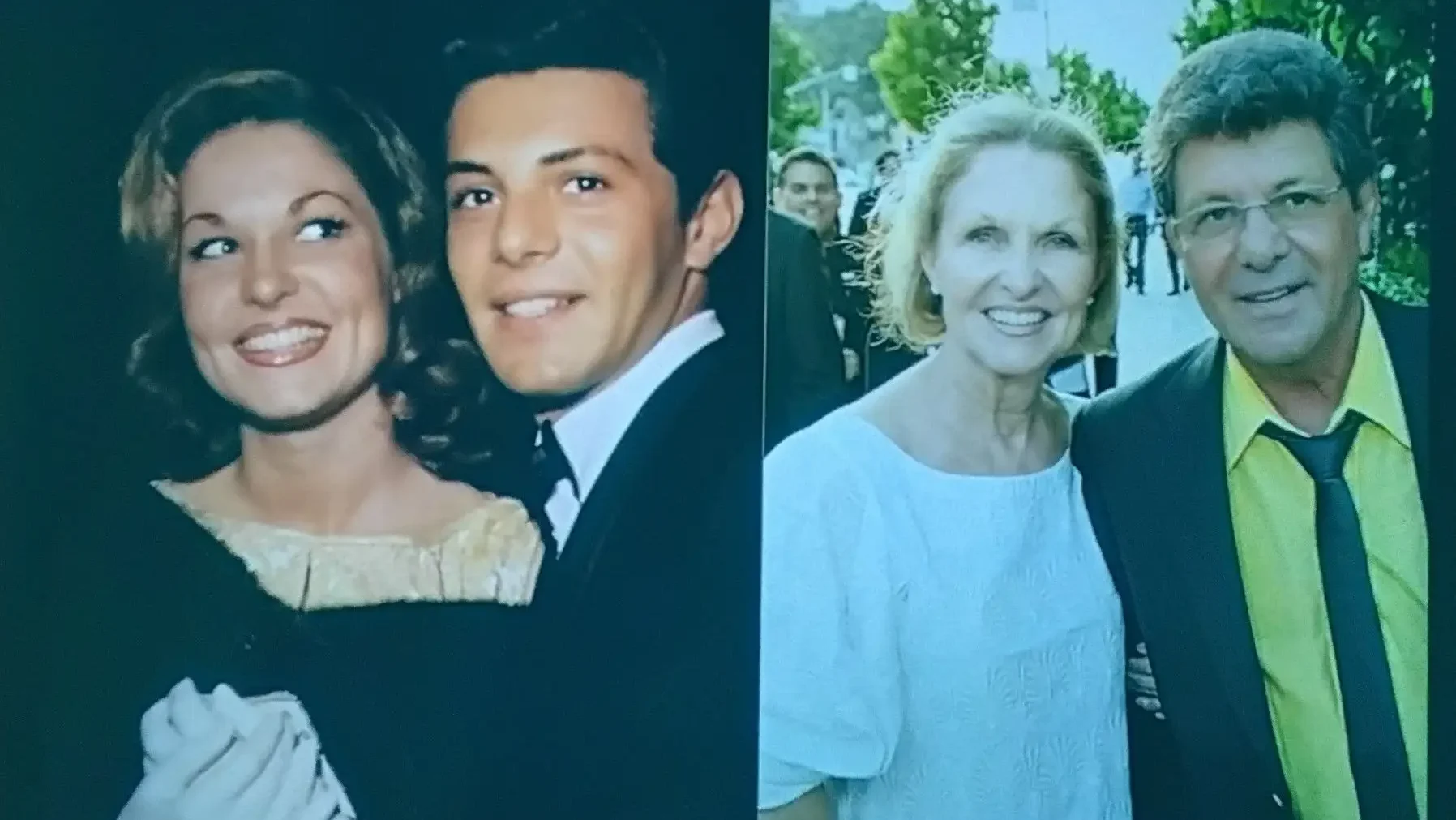
Frankie Avalon and his wife, Kay
The Long Shadow
It would be too simple to draw a straight line from American Bandstand to the media landscape that followed. History does not move in straight lines, and causality is rarely as clean as retrospective analysis makes it appear. But the structural patterns that Bandstand established — the teenager as spectacle, identity as performance, celebrity as a product assembled for maximum visibility and emotional impact — did not disappear when the show ended its run in 1989. They migrated, adapted, and intensified.
MTV, which launched in 1981, inherited the visual grammar of Bandstand and accelerated it. The music video did to the artist what the Bandstand camera had done to Avalon: it made the image the primary product, with the music functioning almost as a soundtrack to a carefully constructed visual identity. The spontaneity was still performed. The ordinariness was still engineered. The machine had simply gotten faster and more sophisticated.
Today’s influencer culture represents a further iteration of the same architecture. The teenager — or the person performing teenager-ness — is again the content. The parasocial relationship that Bandstand’s audience had with Avalon, that sense of intimate familiarity with someone they had never met, is now the explicit business model of an entire industry. The difference is scale and velocity, not structure. What took Bandstand years to construct, a single viral video can accomplish in a weekend.
What Frankie Avalon’s story adds to this picture is a useful complication. He was the original product of the machine — the prototype, as Britannica has described him, of the pop-music teen idol created on Bandstand. But he was also, and more durably, something the machine did not produce: a husband, a father, a man who raised eight children within ten miles of his home and gathered them for Sunday dinners for decades. His two eldest sons, Frankie Jr. and Tony, became musicians who perform alongside him on tour — a fact that carries its own quiet eloquence. The industry made him famous. The life he chose made him something harder to categorize and longer-lasting.
What the Camera Kept
There is a photograph from 1963 — or rather, the photograph the image at the top of this piece recalls — of a young man and woman on the day of their wedding. He is in a dark suit, she is in formal dress, and they are both very young, and they are both smiling, and the cameras outside the church are waiting for them. The photograph captures what the camera always captures: a moment, a surface, a fraction of a second extracted from the ongoing motion of two lives.
Beside it, six decades later, is another image. The same two people, older now, silver-haired, standing together in ordinary daylight. The formality is gone. The studio lighting is gone. What remains is the fact of their continued presence beside each other, which is not a thing any camera can explain, only record.
American Bandstand preserved the image of a teenager from Philadelphia who pinched his nose while singing a song he didn’t entirely respect, and became famous anyway. That image is still there, in the archives, available to anyone who wants to find it. The boy on the screen in 1957, frozen in the permanent afternoon of early television, still young, still smiling, still about to become someone the whole country knows.
What the archive cannot hold is the sixty-three years that followed. Those belong to Kay.
About The Author

Arthur Pendleton
A lifelong fan of the golden era of music, dedicated to preserving the timeless memories and stories of American Bandstand.